

For small and medium publishers, website monetization is a constant balancing act. On one side, you have the need to generate revenue from ad impressions. On the other, you have the user experience. Lean too far in one direction, and you lose revenue. Lean too far in the other, and you lose your audience. The central metric in this balancing act is ad density.
Understanding this metric is the first step to building a sustainable monetization strategy that keeps both your users and ad partners happy. This guide moves beyond simple definitions to give you a strategic framework for ad placement optimization.
Contents
What is Ad Density?
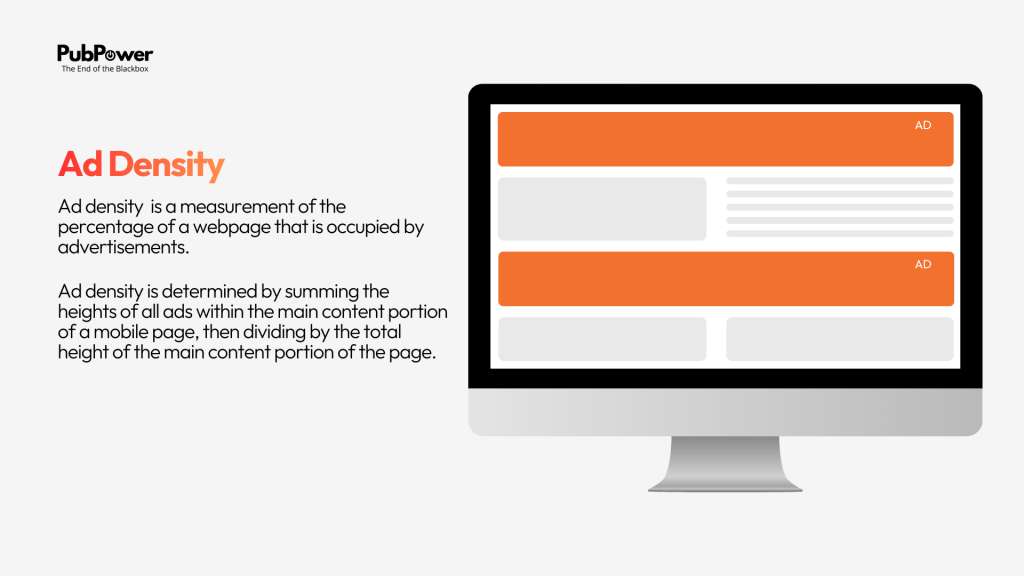
Ad density, also known as the “ad-to-content ratio,” is a measurement of the percentage of a webpage that is occupied by advertisements.
In simple terms, it answers the question: “How much of my page is content, and how much is ads?”
This metric is typically calculated based on the vertical space (pixels) on a page. A page with a high ad density is one that feels “crowded” with ads, while a page with low density feels “clean” or content-first.
How to Calculate Ad Density
Ad density is determined by summing the heights of all ads within the main content portion of a webpage, then dividing by the total height of the main content portion of the page.
Practical Example:
- You have a 2,000-word blog post. You take a full-page screenshot, and it measures 12,000 pixels in height.
- On that page, you have:
- One 728×90 leaderboard ad (90 pixels high).
- Three 300×250 in-content ads (250 * 3 = 750 pixels high).
- One 320×100 sticky footer ad (100 pixels high).
- Your total ad pixel height is 90 + 750 + 100 = 940 pixels.
- Your calculation is: (940 / 12,000) * 100 = 7.8% ad density.
This formula is a useful starting point, but it’s not the full story. It doesn’t account for the intrusiveness of an ad, its impact on page load speed, or whether it’s even seen by the user.
Why Ad Density is a Critical Publisher Metric
Your ad density percentage directly influences your site’s long-term health, from traffic to revenue.
1. The Impact on User Experience (UX)
This is the most obvious factor. When a user visits your page to find an answer or read a story, they have a limited amount of patience.
- High Ad Density: Leads to frustration, “ad blindness” (where users subconsciously ignore ad-heavy sections), and high bounce rates.
- Low Ad Density: Creates a feeling of professionalism and trust. Users are more likely to engage with the content, stay longer, and return in the future.
2. Google’s Better Ads Standards
Years ago, publishers worried about simple ad-to-content ratios. Today, the bigger concern is ad experience. Google, through the Coalition for Better Ads, has defined several ad formats as “intrusive” and will penalize sites that use them.
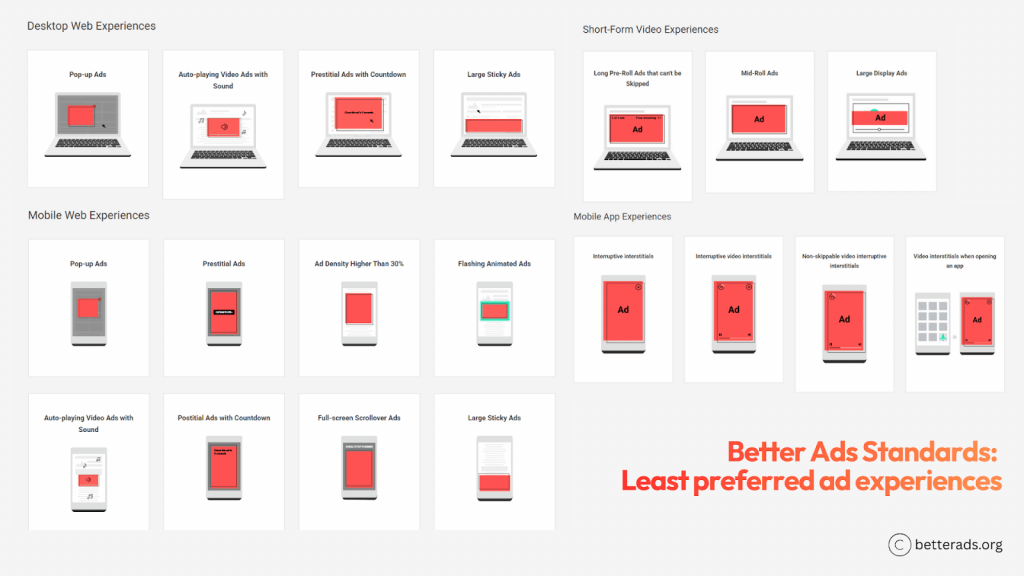
These intrusive experiences include:
- Pop-up ads.
- Auto-playing video ads with sound.
- Large sticky ads that cover more than 30% of the screen.
- Ads that require a “countdown” before content can be accessed.
A site using these formats has a critical ad density problem, regardless of what the pixel-based formula says.
3. The Direct Link to Core Web Vitals (CWV)
Ad density is not just a visual problem; it’s a technical one. Ads, especially from programmatic sources, are often heavy, resource-intensive scripts. This has a direct, negative impact on your Core Web Vitals—the metrics Google uses to measure a page’s technical health and user experience.
- Cumulative Layout Shift (CLS): Ads that load late (or refresh) can cause your content to “jump” around the page. This is a primary cause of poor CLS scores, which can harm your search rankings.
- Interaction to Next Paint (INP): Heavy ad scripts can block the browser’s “main thread.” This means when a user tries to click a menu or open a link, the page feels frozen or sluggish.
- Largest Contentful Paint (LCP): If your largest “above the fold” element is an ad, or if an ad banner competes for bandwidth with your main image or text block, it can severely slow down your LCP time.
4. Revenue and CPM Dynamics
It seems logical that more ads equal more revenue. This is a dangerous trap.
While it’s true that more ad slots can lead to more total impressions, it often leads to a lower value for each impression. Ad partners track viewability. If you have 10 ads on a page but 7 of them are at the bottom and never seen, your overall viewability score plummets.
This tells ad exchanges that your inventory is low-quality, causing them to bid less. You may end up making less money with 10 ads than you did with 3 high-performing, high-viewability slots.
What is the “Ideal” Ad Density? (Debunking the 30% Myth)
You will often see an “ideal” ad density of 15% to 30% cited online. This is a myth.
This range is a holdover from old Google AdSense “content-to-ad ratio” recommendations that are no longer the primary rule. There is no single magic number for ad density.
The “ideal” density is unique to your site and depends on several factors.
Factors That Define Your Ideal Density
Instead of a fixed percentage, your ad strategy should be flexible and based on these key variables:
- Content Type: A 4,000-word long-form guide or a multi-page gallery can comfortably support more ad placements (e.g., one every 4-5 paragraphs) than a 300-word news brief. A “tool” page (like a calculator) has very low ad tolerance.
- Device: Mobile screens are small and intolerant. A single 300×250 ad on a mobile phone takes up a massive portion of the screen, creating a high-density experience. Desktop layouts can handle larger formats like a 728×90 leaderboard or a 300×600 sidebar ad without feeling as intrusive.
- User Intent: Why is the user on your page? If they are looking for a quick answer (e.g., “what is ad density”), their tolerance for ads is lower. If they are in “browse” mode (e.g., reading a lifestyle blog), they are generally more tolerant of in-content ads.
- Traffic Source: Users arriving from search are often on a mission. Users from social media or newsletters may be more relaxed and open to a browsing experience that includes more ad placements.
Strategic Ad Placement Optimization
Once you stop chasing a magic number, you can focus on smart ad placement optimization. The goal is to maximize the value of each ad slot, not just increase the number of slots.
1. Above the Fold (ATF) vs. Below the Fold (BTF)
- Above the Fold (ATF): This is the area a user sees without scrolling. Ads placed here have the highest potential viewability and command the highest CPMs. However, this is also the most dangerous area. An ATF ad can hurt your LCP score and be the first thing that makes a user bounce.
- Below the Fold (BTF): These are ads the user sees only as they scroll. They are generally safer for Core Web Vitals. The key here is to place them thoughtfully within the content to capture attention as the user reads.
>> Read more: What are ATF and BTF? Why It is Important in Ad Placement
2. Ad Formats and Their Density Impact
The type of ad you use matters more than the quantity.
- In-Content Ads: These are standard banners (e.g., 300×250) placed between paragraphs. This is the safest, most common format. A good rule of thumb is to allow 3-4 full paragraphs of content between each ad.
- Sticky Ads (Anchor Ads): These “stick” to the top or bottom of the screen as the user scrolls. They have near-100% viewability, which is great for revenue, but they also contribute to “ad clutter.” If you use one, ensure it’s on either desktop or mobile (not both) and is easy to close.
- Vignette Ads: These full-screen ads appear when a user navigates from one page to another. They are high-revenue but must be used sparingly, as Google classifies them as intrusive if shown too frequently.
- Video Ads (Instream/Outstream): Video ad formats can be very profitable. An “outstream” player that appears within content and plays silently is a good way to add revenue, but be mindful of its impact on page load.
>> Read more: Best Ad Formats for Popular Niches 2025
3. Use Technology for Smart Optimization
Your ad stack shouldn’t be static. Modern ad technology allows you to optimize ad density automatically.
- Lazy Loading: This is non-negotiable. Lazy-loaded ads only load when they are about to scroll into view. This dramatically improves your initial page load speed and Core Web Vitals.
- A/B Testing: Don’t just guess. Run tests. Does a layout with 3 in-content ads perform better than one with 2 in-content ads and 1 sticky footer? Let the data on revenue (RPM) and user engagement (bounce rate) decide.
- Dynamic Floor Pricing: Instead of just showing any ad, header bidding technology allows you to set dynamic price floors. This means you can create a rule to not show an ad unless it pays above a certain CPM. This can reduce your ad density while increasing your revenue, as you only show high-value impressions.
How PubPower Solves the Ad Density Puzzle
The old way of thinking was to add more ad slots and hope for more money. The PubPower way is to make every ad slot work smarter.
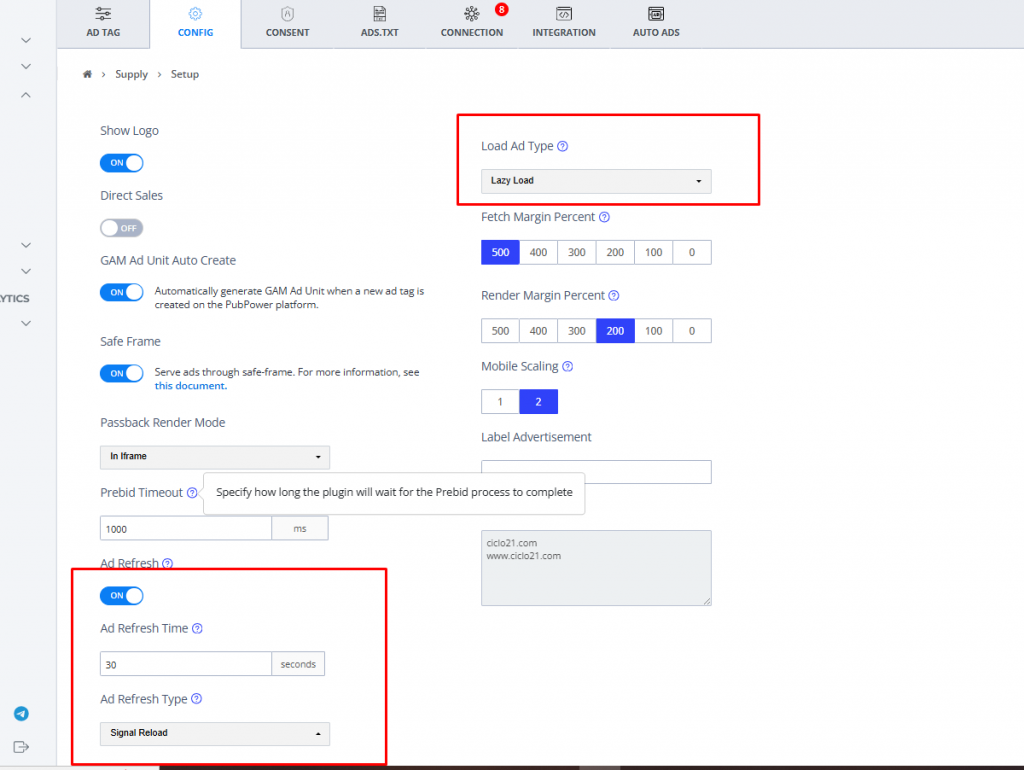
Our platform intelligently refreshes ad inventory based on your ad refresh settings. When a user visits the site, ad requests are triggered according to your Ad Refresh Time (recommended: 30s) and Ad Refresh Type (recommended: Signal Reload + Lazy Load), helping you increase revenue while reducing ad-clutter.
- Dynamic Floor Optimization: Our technology analyzes demand and automatically adjusts your CPM floors. This ensures you’re never “giving away” a valuable impression for a low price, reducing the need for low-value, high-density ad slots.
- Advanced A/B Testing: We make it simple to test different ad layouts, formats, and density rules to find the perfect balance for your specific audience.
- AdBlock Detector: Recover revenue from users with ad blockers without punishing your entire audience. This adds a revenue stream without increasing the ad density for your regular visitors.
Conclusion: A Smarter Approach to Ad Density
Stop focusing on an imaginary “ideal ad density” percentage. The best monetization strategy is not about adding more ads; it’s about increasing the value of every impression while fiercely protecting your user experience and technical performance.
By monitoring your Core Web Vitals, following the Better Ads Standards, and using smart technology to test and optimize your layout, you can build a more sustainable and more profitable website.
Stop Guessing. Start Optimizing.
See how PubPower’s self-serve header bidding platform gives you the tools to increase your ad revenue without compromising your site’s quality.