

You hit 500K monthly sessions. You optimized your ad layouts, fixed your page speed, and pushed your viewability above 70%. But if your ad revenue is still flat, you are likely looking for “how to increase CPM for publishers” when the basic tactics stop working. The hard truth is that past a certain traffic threshold, your CPM is capped by the architecture of your ad stack, not your website layout. If you rely on AdSense or a traditional sequential waterfall, you are systematically preventing buyers from competing for your inventory. In this guide, seven structural changes you can make today to force real-time competition, eliminate the ad tech black box, and drive up your baseline yield.
Contents
- 1 Key Takeaways
- 2 The Truth About CPM: Why Your Revenue is Currently Capped
- 3 7 Proven Strategies to Maximize CPMs and Ad Revenue
- 3.1 1. Ditch the Waterfall for a Unified Auction (Header Bidding)
- 3.2 2. Connect to Maximum Demand
- 3.3 3. Implement Dynamic Price Floors
- 3.4 4. Optimize Viewability and Lazy Loading
- 3.5 5. Deploy Smart Ad Refresh
- 3.6 6. Fix Page Latency and Optimize Timeouts
- 3.7 7. Leverage Identity Solutions for First-Party Data
- 4 How PubPower Helps Yield Optimization
- 5 Frequently Asked Questions (People Also Ask)
Key Takeaways
- Relying solely on AdSense or traditional waterfalls artificially caps your CPMs by limiting buyer competition.
- Upgrading to a unified header bidding auction with 30+ SSPs forces buyers to pay their true maximum price in real time.
- Optimizing dynamic price floors, viewability, and timeout settings typically generates a 20–40% ad revenue uplift.
- PubPower’s self-serve platform provides unified, log-level reporting so publishers can track exactly which SSPs drive the highest yield.
The Truth About CPM: Why Your Revenue is Currently Capped
Your CPM is likely capped because traditional waterfall setups and single-network models like AdSense restrict buyer competition. When demand partners do not compete simultaneously in a transparent auction, they pay historical averages instead of the true market value of your impression, creating a hidden “black box tax” on your revenue.
When you only use AdSense, you only get buyers within Google’s ecosystem. Google demand is vast, but it is just a fraction of the total global programmatic market. If a premium buyer on an independent exchange is willing to pay $5.00 for your specific audience, but your setup never lets that exchange see the impression, you are stuck accepting Google’s $2.50 bid.
This problem gets worse with a standard waterfall model. A waterfall calls ad networks one by one based on historical yield. The network at the top might buy an impression for a cheap, average price, effectively stealing that impression from a buyer lower down the chain who would have paid significantly more right at that exact second.
>> Read our full guide to understand exactly how the waterfall compares to header bidding.
This sequential setup is a closed-loop auction. The rules favor the networks, not you. Furthermore, in these opaque setups, intermediaries often take undisclosed margins, a problem the industry calls the “black box tax.” If the SSP doesn’t report exactly what the DSP paid versus what you received, you cannot know your true auction density. To break this ceiling, you must move from sequential guessing games to simultaneous, transparent competition.
7 Proven Strategies to Maximize CPMs and Ad Revenue
To maximize programmatic yield, publishers must increase demand density and optimize their ad inventory quality. The most effective strategies involve switching to open-source header bidding, connecting to multiple premium SSPs, setting dynamic price floors, and improving Core Web Vitals to attract high-paying buyers.
These are not hypothetical optimizations. These are the exact structural changes AdOps teams use to increase baseline CPMs without ruining the user experience.
1. Ditch the Waterfall for a Unified Auction (Header Bidding)
Moving from a sequential waterfall to a unified header bidding auction ensures all buyers bid simultaneously. This real-time competition forces ad networks to submit their absolute highest price, instantly driving up your baseline CPM and overall yield.
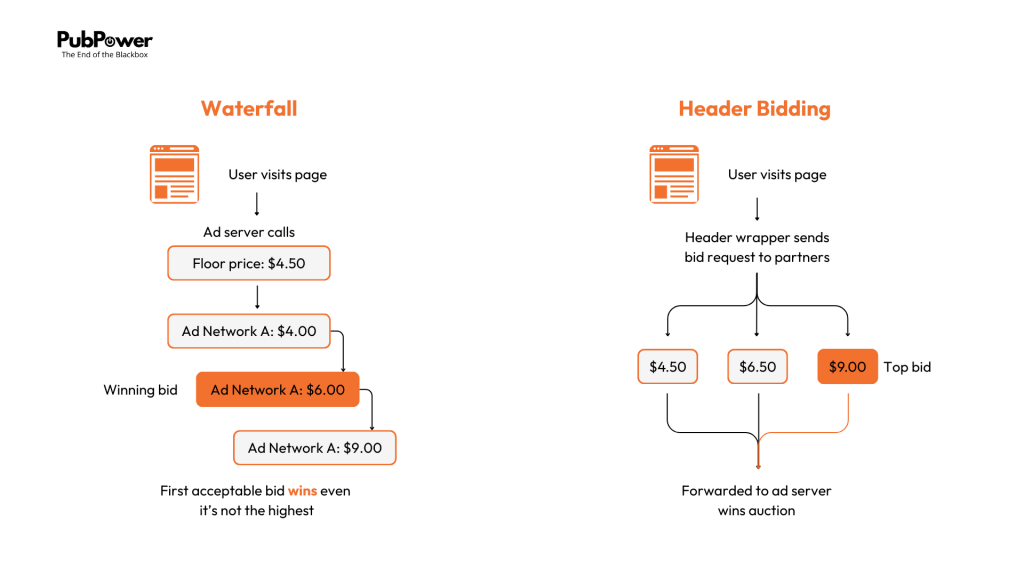
A waterfall setup tests buyers one at a time. It stops at the first network willing to meet your minimum floor. A unified auction, powered by Prebid.js, sends the request to all your SSPs simultaneously. The highest bidder wins, every single time. It is a live stock market for your inventory.
>> Find out what header bidding is and why you should switch to header bidding
2. Connect to Maximum Demand
Working with only three or four SSPs leaves money on the table. Expanding your demand stack to include 30+ premium SSPs exponentially increases bid density, ensuring you capture the highest-paying buyer for every specific user, device, and geographic location.
More bidders mean a higher clearing price. If you only plug into Google AdX and two other networks, your auction lacks density. By connecting to 30+ SSPs, you capture the unique demand from different regions and advertising niches. You force the biggest players to fight for the impression.
3. Implement Dynamic Price Floors
Static price floors often lead to unsold impressions or undervalued inventory. Implementing dynamic price floors adjusts your minimum acceptable bid based on real-time data, combating buyer bid shading without sacrificing your overall fill rate.
DSPs use algorithms to buy your inventory as cheaply as possible. This tactic is called “bid shading.” If an advertiser is willing to pay $3.00, their algorithm might bid $1.50 just to test your floor. If your floor is static at $1.00, you just lost $1.50.
Dynamic floors fix this. They use historical bid data to automatically raise the floor price on specific advertisers or ad slots. This forces the DSP to bid higher to win the impression. It stops inventory depreciation and pulls lost value back to the publisher. [Google Ad Manager Help Center]
4. Optimize Viewability and Lazy Loading
Premium buyers use historical viewability scores to determine their maximum bids. By implementing lazy loading—where ads only render when they enter the user’s viewport—publishers can dramatically boost viewability metrics, prompting DSPs to bid significantly higher over the long term.
If your ads load at the bottom of the page before the user scrolls down, your viewability score drops. Buyers track this. If your domain has poor viewability, they will lower their bids or stop bidding entirely.
Lazy loading solves this by delaying the ad request until the user approaches the ad slot. This reduces main-thread congestion, protecting your Core Web Vitals (like LCP), and guarantees that almost every loaded ad is actually seen. High viewability leads directly to stronger auction performance.
5. Deploy Smart Ad Refresh
Smart ad refresh allows you to load new ad creatives for highly engaged users without requiring a full page reload. When triggered by active user behavior and strict viewability conditions, this tactic multiplies your total impressions per session without diluting your overall CPM.
Do not refresh ads blindly every 30 seconds. That ruins your viewability and drives down your CPM. Instead, use “smart refresh” or “signal reload” on Pubower.
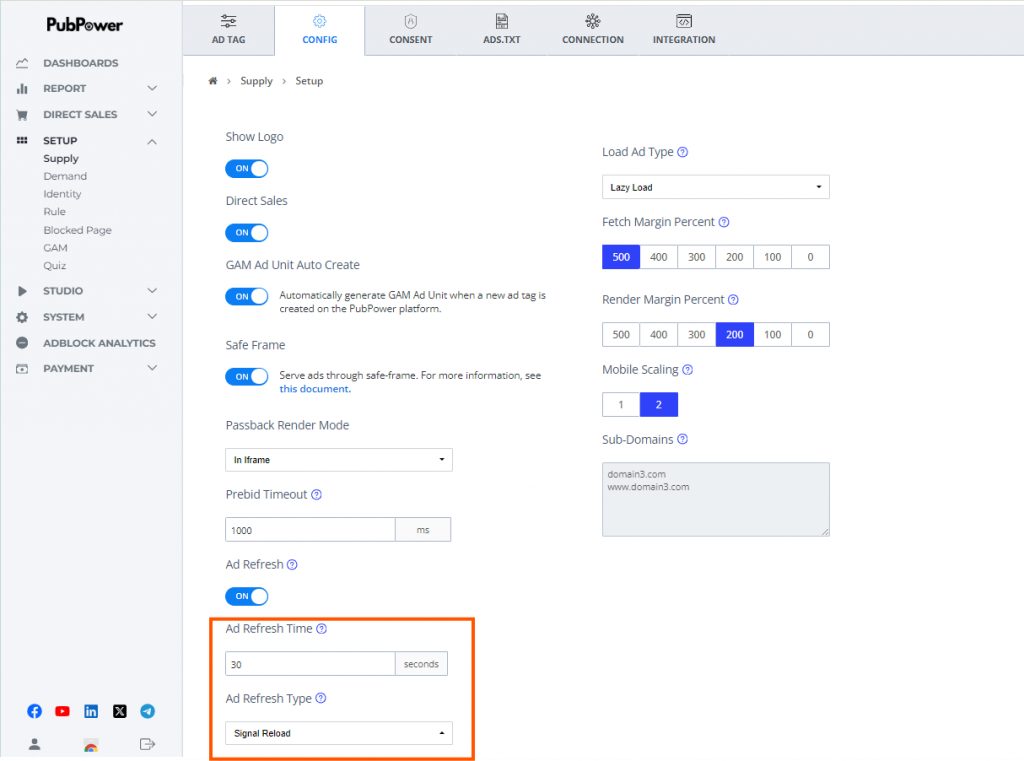
Smart refresh only triggers when the ad slot is currently in the viewport and the user is actively engaging with the page. This creates highly valuable, 90%+ viewable impressions. You double your ad requests on long-form content while keeping your inventory quality premium.
6. Fix Page Latency and Optimize Timeouts
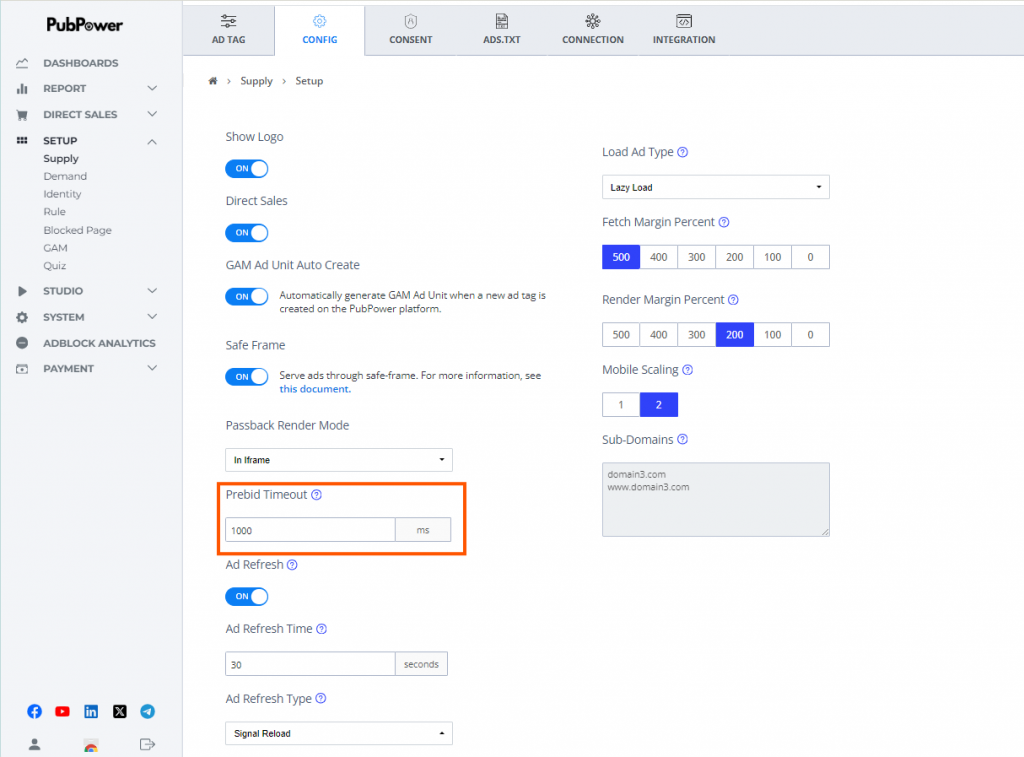
A slow website directly hurts your programmatic ad revenue. If your Prebid timeouts are poorly configured, high-paying SSPs will miss the auction window entirely, causing you to lose premium bids while frustrating your users with slow content rendering.
Your header bidding wrapper has a strict timeout limit. If you set it too low (e.g., 500ms), distant SSPs won’t respond in time, and you lose their bids. If you set it too high (e.g., 2500ms), your page freezes, users bounce, and viewability drops. AdOps teams must test and balance these timeouts constantly to maximize yield without hurting UX.
7. Leverage Identity Solutions for First-Party Data
As the industry phases out third-party cookies, buyers are willing to bid significantly higher for authenticated traffic. Integrating alternative identity solutions and passing first-party data securely into the bid stream ensures your CPMs remain high in a privacy-first ecosystem.
Advertisers pay a premium when they know exactly who they are targeting. You must start collecting logged-in user data and passing it to SSPs through secure ID modules. This makes your inventory addressable, keeping your CPMs high even on browsers that block third-party cookies.
>> Read 8 tips help publishers compete in programmatic advertising
How PubPower Helps Yield Optimization
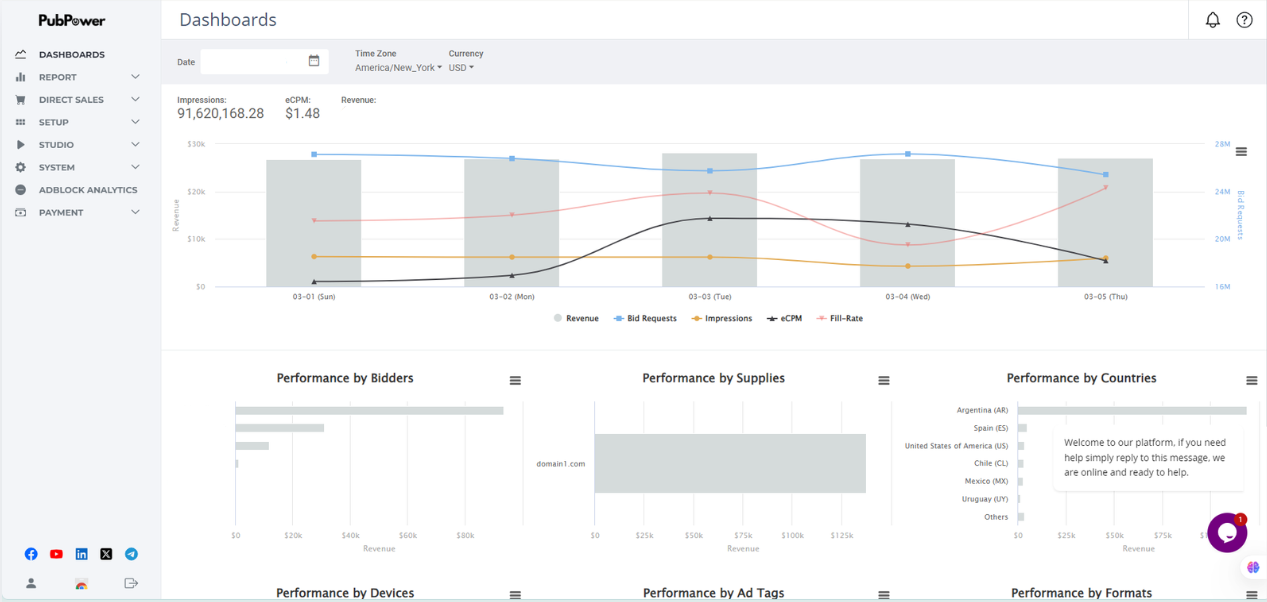
PubPower empowers publishers with a self-serve platform that instantly connects to 30+ SSPs and automatically optimizes wrapper timeouts. Our unified reporting dashboard provides log-level transparency, allowing AdOps teams to see exactly how each demand partner performs and effectively eliminate hidden fees.
You do not need an in-house engineering team to implement the strategies listed above. Building a Prebid wrapper from scratch, negotiating individual SSP contracts, and constantly tweaking timeout logic is a full-time job. PubPower automates that entire process so you can focus on audience growth.
Stop leaving money on the table. Book a demo today and let our AdOps experts show you how much more your inventory is worth
Frequently Asked Questions (People Also Ask)
Yield optimization involves complex technical configurations that can deeply impact your bottom line. Here are the most common questions publishers ask when trying to diagnose revenue drops and increase their overall programmatic performance.
Why is my CPM dropping in Q1?
Sudden CPM drops are usually caused by seasonal advertising trends (like the drop in January), accidental changes to your site’s layout that hurt viewability, or broken SSP bidder adapters that remove key demand sources from your auction.
What is a good CPM for my niche?
A “good” CPM varies heavily by vertical, geography, and traffic quality. Finance and B2B tech niches often see CPMs above $5.00, while general entertainment or viral news sites might average between $1.00 and $2.50.
Does header bidding slow down my website and drop ad fill rate?
Header bidding can cause latency if implemented manually with poor configurations. However, using an optimized, enterprise-grade wrapper with asynchronous loading and strict timeouts ensures high ad revenue without harming your Core Web Vitals or fill rate.